WHO WE HELP · INDEPENDENT REPAIR SHOPS
Bring the right work into your independent shop.
Whether you run a shop or work as a mobile mechanic, we help you attract jobs that fit your services, area and schedule.
GO FILL THE BAYS by OTG

THE OPERATING SITUATION
Independent shops do not all need the same kind of growth.
01
Established general repair shop
Needs more qualified local demand and a clearer answer to which marketing sources produce useful business.
02
Growing shop adding technicians or bays
Needs demand generation that matches new capacity without losing lead quality.
03
Capacity-constrained / full shop
May need better job mix or higher-value demand instead of more raw car count.
04
European / import specialist
Needs higher-value service demand and stronger vehicle/service authority around the work it is built to perform.
05
Shop changing agencies
Needs account ownership, tracking, search quality, and reporting reviewed before more spend gets added.
06
Operational constraint inside the shop
May need separately scoped OTG Fixed Operations consulting rather than pretending marketing alone will solve capacity, workflow, or performance issues.
WHAT MARKETING SUCCESS MEANS
Success depends on what the shop actually needs next.
Qualified local demand
Attract customers whose service, vehicle, geography, timing, and expectations fit the shop.
Right job mix
Align campaigns, content, and service priorities with the work management actually wants more of.
Capacity-aware demand
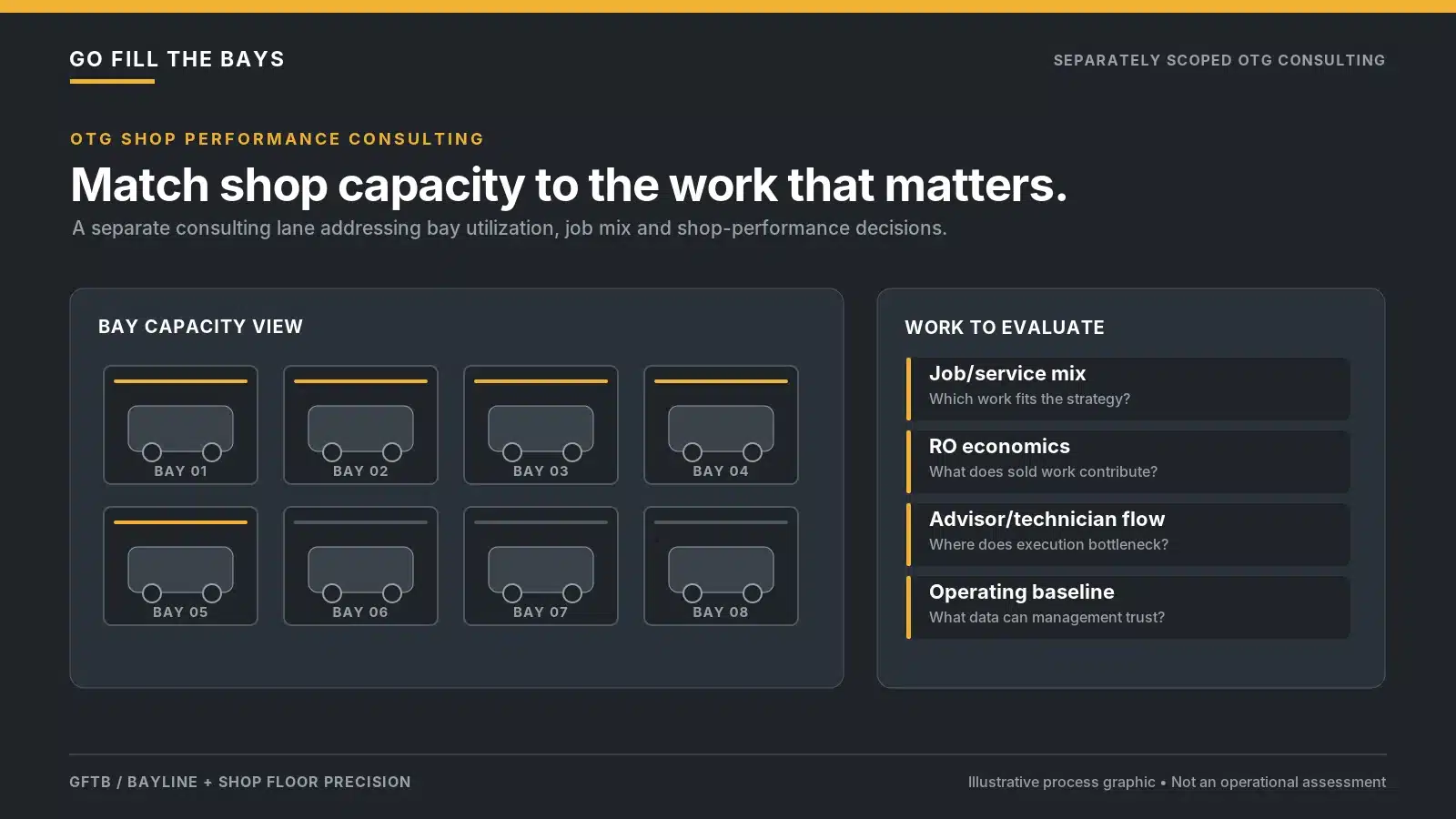
Increase volume when bays and technicians have room; shift the mix when raw car count is not the real need.
Trust before the call
Make the website, GBP, reviews, services, photos, and local information credible enough to choose.
Clean path to appointment
Reduce friction between discovery, contact, qualification, and scheduling.
Clearer attribution
Follow marketing toward qualified leads, appointments, ROs, sold work, and revenue only as far as reliable evidence allows.
MOBILE REPAIR BUSINESSES
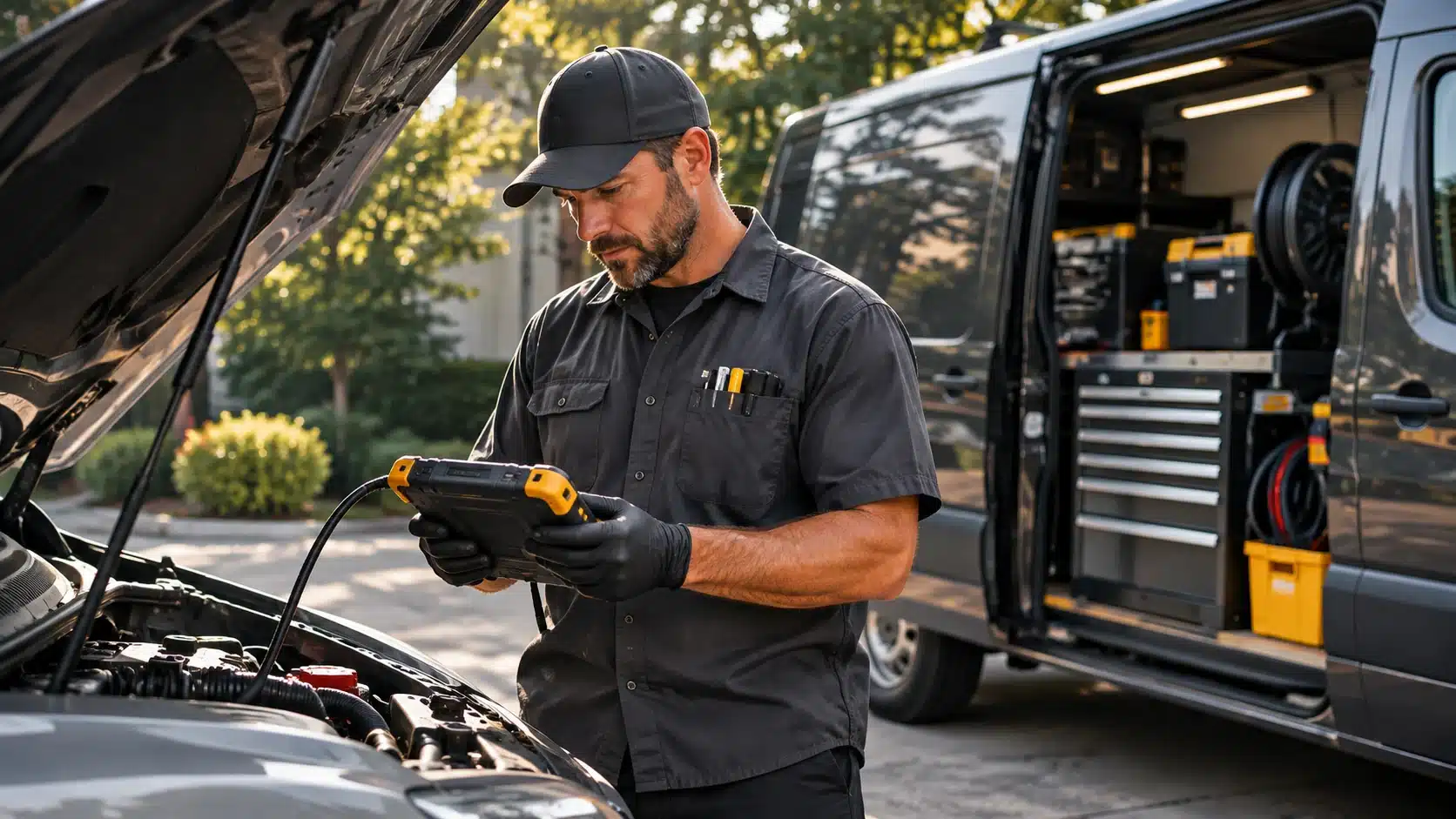
For independent mobile mechanics, the right job matters more than the next call.
A mobile repair business has a different capacity model. Instead of filling fixed bays, you need qualified jobs that fit the service radius, travel time, equipment and available hours. We align customer acquisition to those constraints.
Service area and job fit
Make the service radius, repair categories, vehicle requirements and on-site limitations clear before the call.
Travel-aware scheduling
Align demand with available hours, travel distance, parts availability and the jobs you can realistically complete.
Trust and traceability
Make the booking path, business identity and review evidence credible; track qualified inquiries and completed jobs as far as the data supports.
CAPABILITIES THAT TYPICALLY MATTER
Use the capabilities the diagnosis calls for — not a mandatory package.
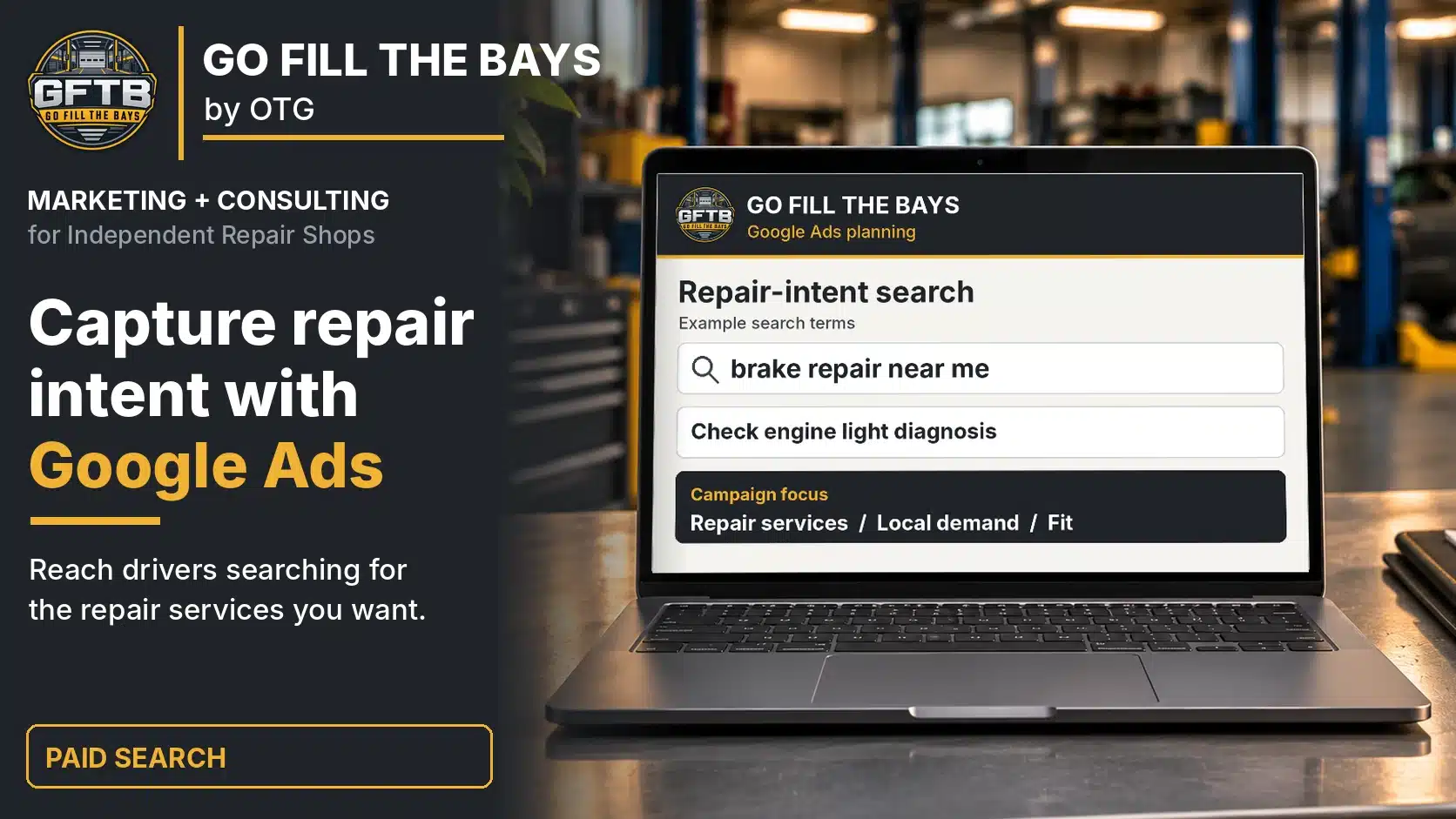
Google Ads
Capture high-intent repair demand while controlling poor-fit searches and service mix.
Explore Google Ads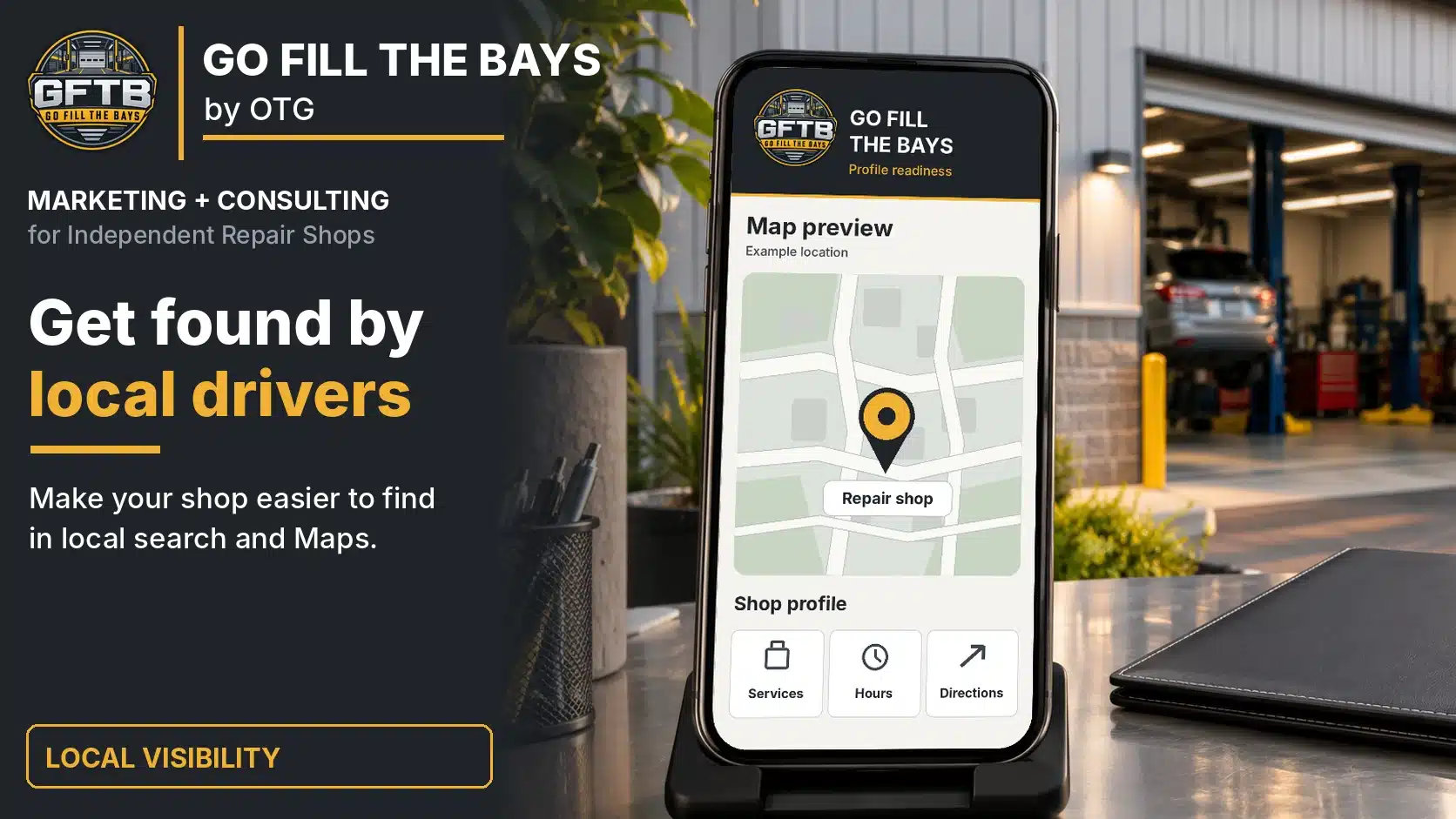
GBP + Maps
Keep the shop accurate, credible, locally relevant, and aligned with wanted services.
Explore GBP + Maps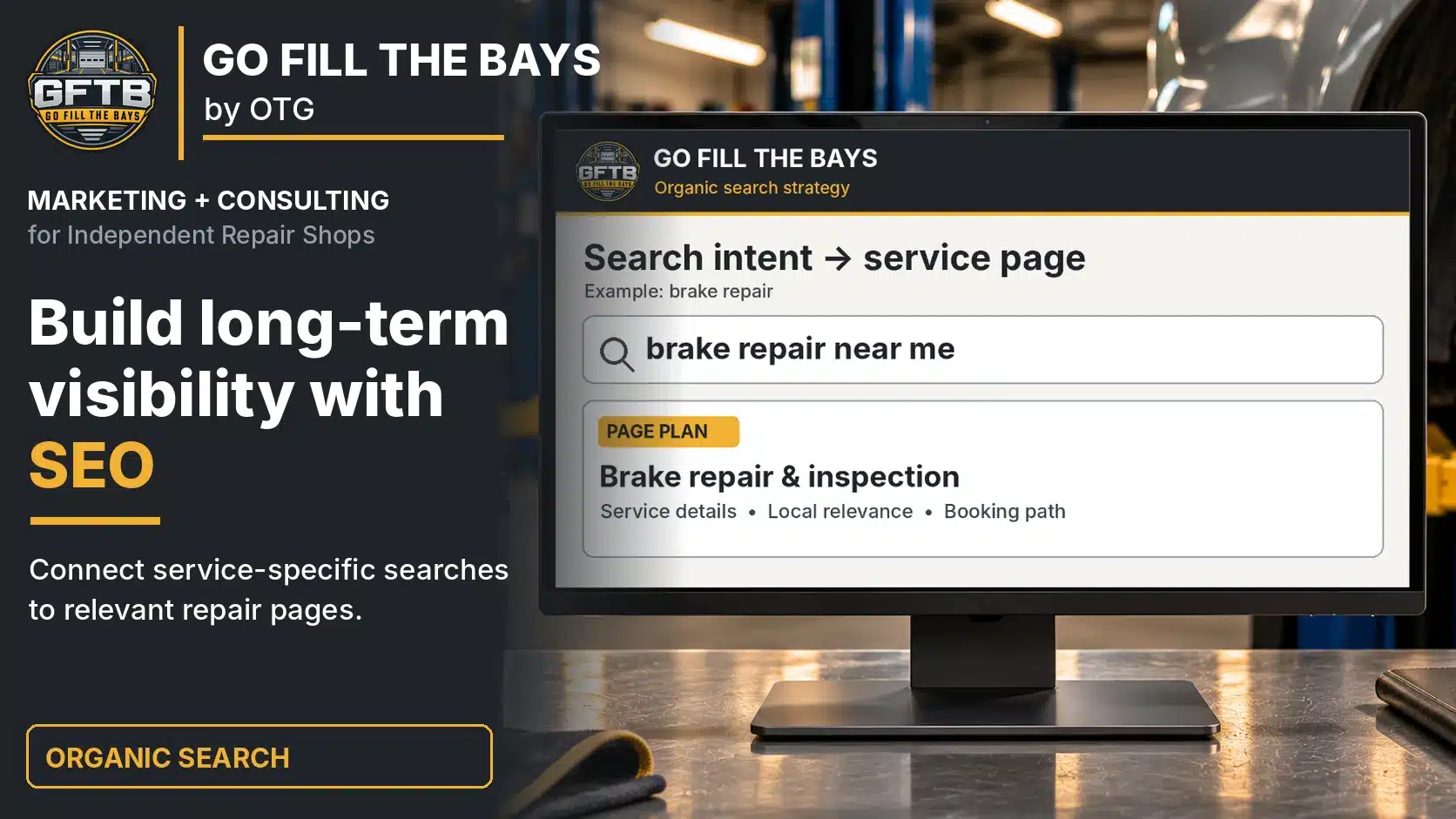
Auto Repair SEO
Build durable visibility around real services, vehicles, local intent, and commercially useful demand.
Explore SEO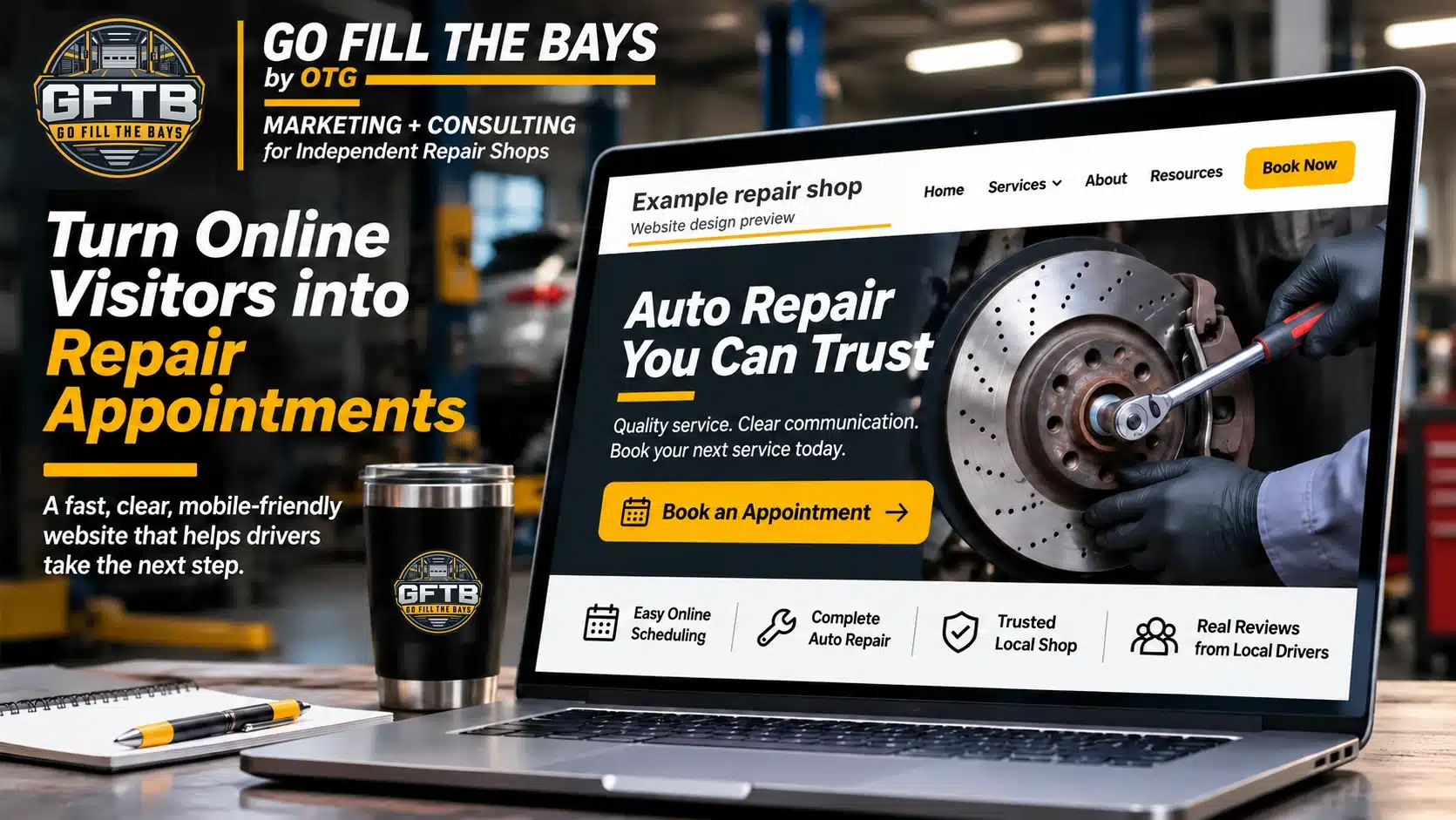
Website + Conversion
Make service clarity, trust, mobile action, booking/call paths, and measurement work together.
Explore Websites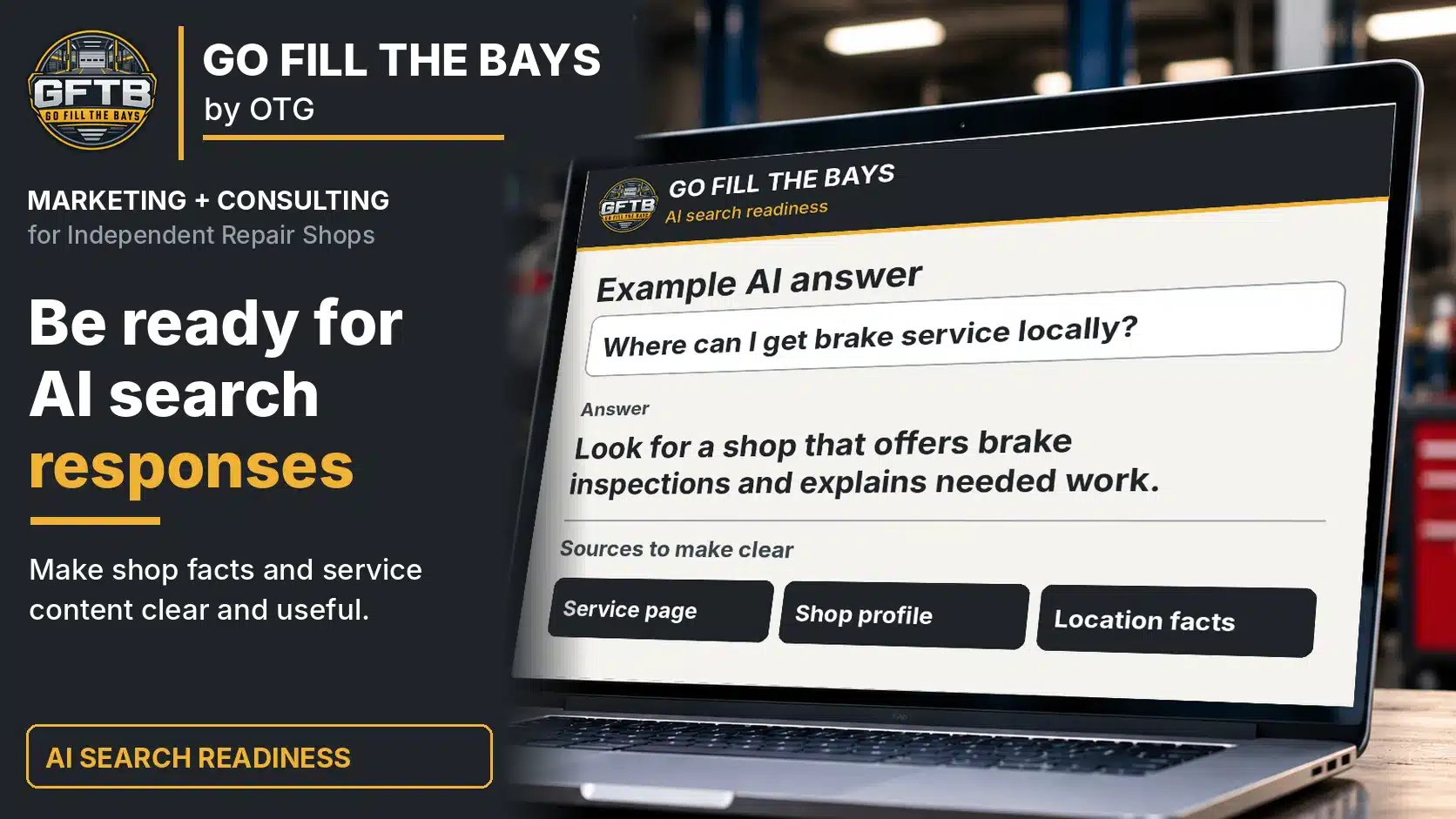
GEO + AI Search
Improve entity clarity, source readiness, crawlability, and observed AI-assisted discovery without ranking guarantees.
Explore GEO + AI Search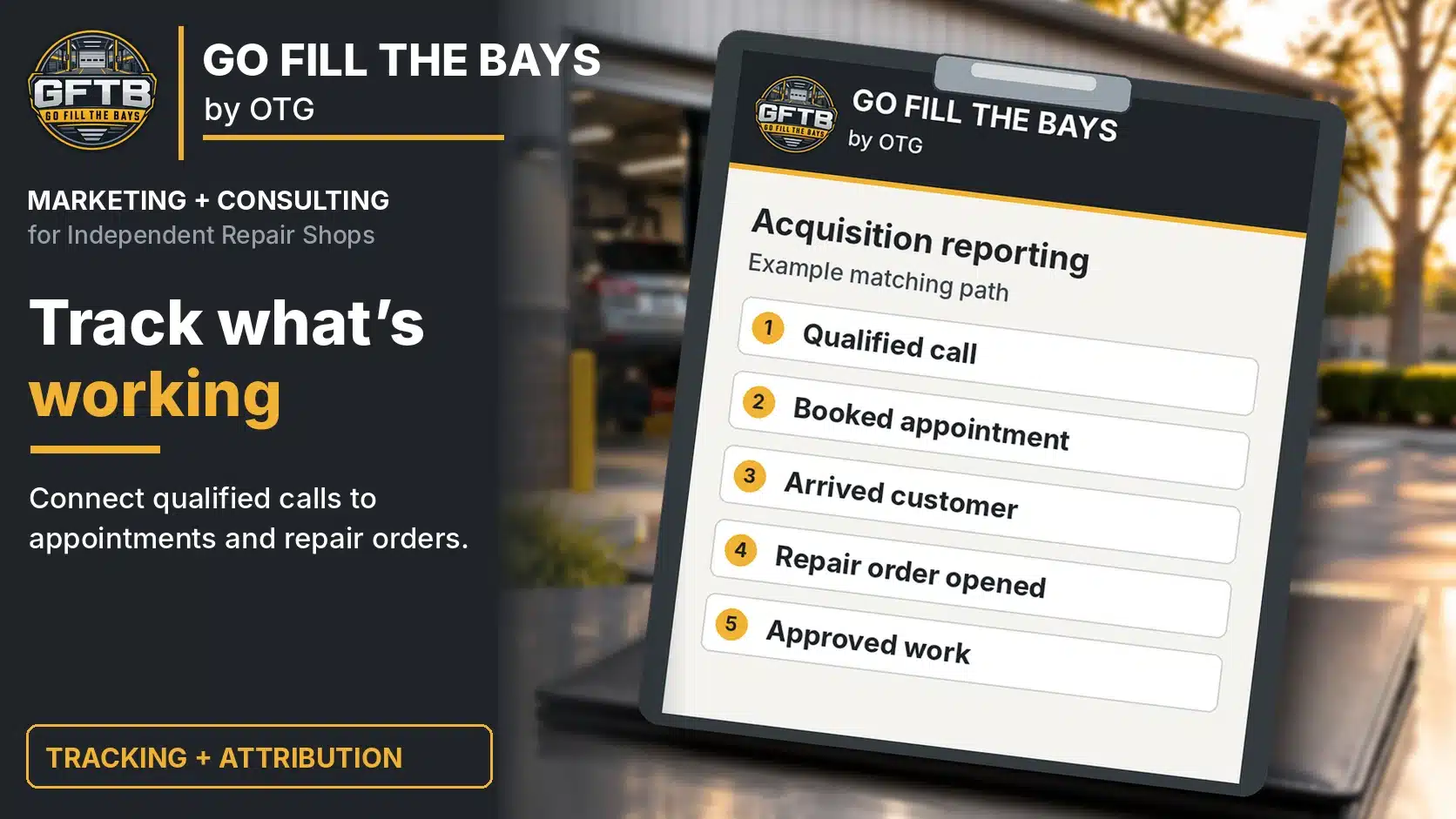
Tracking + Attribution
Define conversions, preserve sources, reconcile outcomes where possible, and keep ROI claims evidence-based.
Explore AttributionMEASURE PAST THE PHONE CALL
Follow the journey as far downstream as the shop's data reliably allows.
01
Qualified lead
Did the inquiry actually fit the shop?
02
Appointment
Did the useful lead become a scheduled visit?
03
Repair order
Can the customer/appointment be matched to an opened RO?
04
Sold work / RO sales
What work and value are defensibly supported?
05
Attributed revenue
Can the shop-system value be tied to a documented source-matching method?
WHEN FIXED OPERATIONS IS RELEVANT
If the constraint is inside the shop, OTG can scope that work separately.
Capacity/bay utilization, job mix, RO economics, advisor/technician performance, workflow, dispatch, scheduling, KPI discipline, and other operating-performance work belong to the separate OTG Shop Performance / Fixed Operations Consulting lane. They are not automatically included in a marketing engagement and do not turn the Fill The Bays Audit into a general operations audit.
Marketing problem
Use the Fill The Bays Audit to diagnose visibility, trust, conversion, scheduling, sold-work measurement, and acquisition-system leakage.
Operating problem
Use a Strategy Call to discuss a separately scoped Fixed Operations baseline, project, or advisory engagement.
Explore Fixed OperationsOWNER QUESTIONS
Questions independent shop owners are already asking.
Why am I paying for calls that never become cars?
Lead volume can look healthy while service fit, qualification, answering, or scheduling breaks downstream.
Do I need more demand or a better job mix?
Capacity, technician mix, service economics, seasonality, and appointment lead time should shape the answer.
Which marketing source produced repair orders?
That depends on source preservation and a defensible match into CRM, booking, and the shop-management system.
Should my agency own our accounts?
GFTB prefers client ownership or durable administrative access to core digital assets where platform rules permit.
NEXT STEP
Find the acquisition leaks that matter for the shop you actually run.
Run the Fill The Bays Audit to inspect the marketing/customer-acquisition system, identify evidence coverage, and prioritize the next changes without assuming every independent shop needs the same plan.